Not all body fat is the same. The soft layer you can pinch on your arm or belly is only part of the story, and often not the most important part. Deeper inside, wrapped around your liver, intestines, and other organs, sits a different kind of fat that behaves in its own way and carries far more weight for your health. It is called visceral fat, and understanding it changes how you read a waistline, a scale, and even a normal BMI.
Visceral fat is the deep fat around your organs. Unlike the fat under your skin, it is metabolically active and closely tied to type 2 diabetes and heart disease. A large waist is the best everyday clue, and everyday habits are what shift it.
What visceral fat is
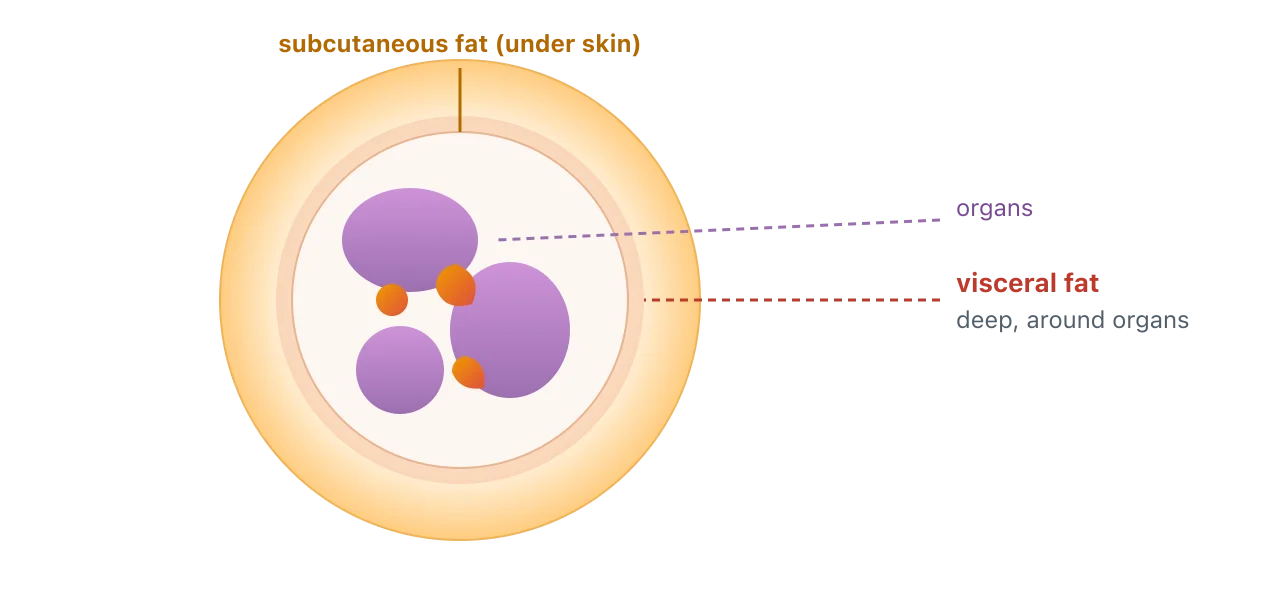
Your body stores fat in two main places. Subcutaneous fat is the layer just beneath the skin, spread across the body, and it is what you feel when you pinch your waist or arm. Visceral fat is different. It is packed deep inside the abdominal cavity, in and around the organs, filling the spaces between the liver, stomach, and intestines. You cannot pinch it, and you cannot see it directly, but a protruding, firm belly is often a sign that plenty of it is present.
A certain amount of visceral fat is completely normal and even useful, cushioning the organs. The problem is excess. Because of where it sits and how it behaves, having too much visceral fat is one of the more meaningful fat-related signals for health, which is exactly why waist-based measures have become so valued alongside BMI.
Why it is different
The reason visceral fat matters more than subcutaneous fat comes down to biology. Visceral fat is not a passive storage depot; it is metabolically active tissue that releases fatty acids, hormones, and inflammatory signalling molecules directly into the bloodstream, and it does so right next to the liver. This steady stream of signals can nudge the body toward insulin resistance and low-grade inflammation, two processes that sit upstream of a lot of chronic disease.
Subcutaneous fat, by contrast, is relatively quiet and better contained. That difference in behaviour is why two people carrying the same total amount of fat can face different risks depending on where that fat is stored. It also explains a puzzle many people notice: why the belly, specifically, draws so much attention in health advice, when fat elsewhere seems to matter less.
Why it matters for health
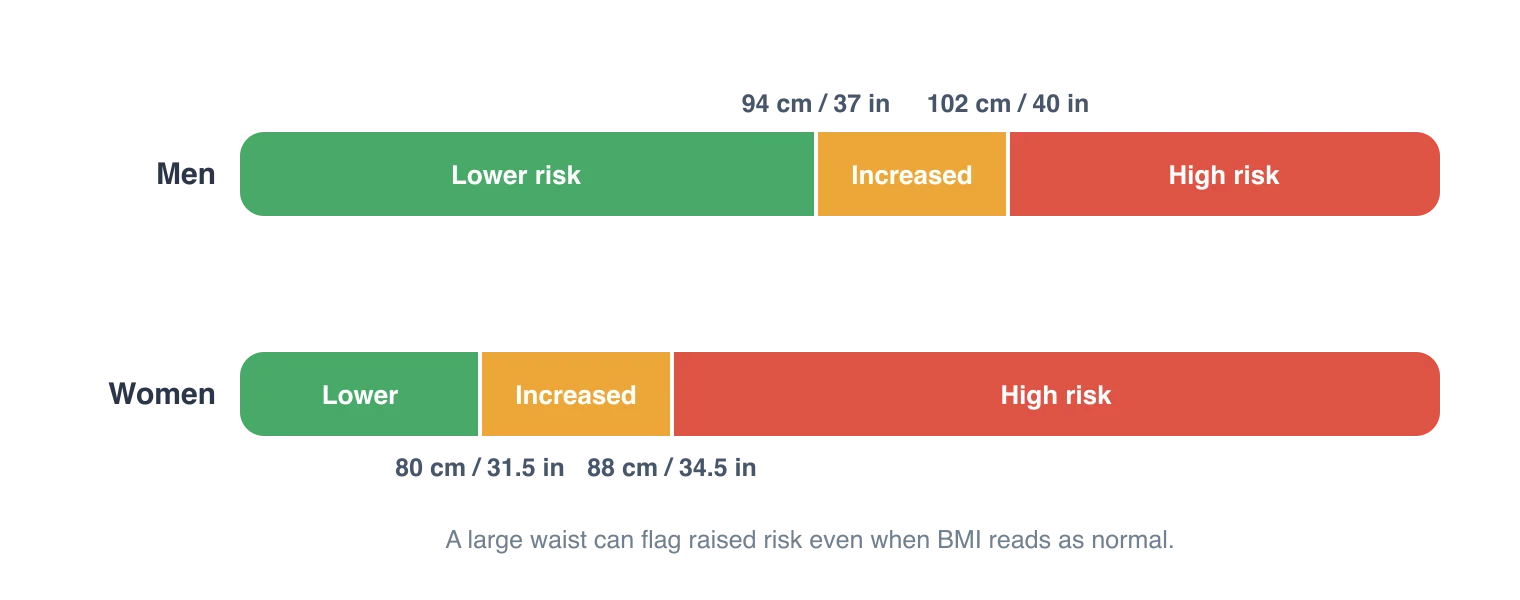
Excess visceral fat is associated with a raised risk of several serious conditions, including type 2 diabetes, high blood pressure, unhealthy cholesterol patterns, and cardiovascular disease. The link is strong enough that a large waist can flag elevated risk even when body weight and BMI look reassuringly normal. That is the crucial insight: visceral fat is one of the main reasons a person can be "healthy weight" on the scale and still carry meaningful risk.
None of this means a bigger waist guarantees illness, or that a slimmer one guarantees health. These are risks across populations, not certainties for individuals. But as signals go, visceral fat is one of the more honest ones, which is why it is worth paying attention to rather than dismissing.
There is also a hopeful side to visceral fat's activity. Because it is metabolically busy, it tends to be among the first fat the body draws on when you become more active and eat a little better. That means people often see encouraging changes in their waist, and in the markers tied to visceral fat, well before the scale moves much at all. The very thing that makes excess visceral fat risky also makes it comparatively responsive, which is genuinely good news.
How to gauge yours
Short of a scan, you cannot measure visceral fat exactly, but you can get a good everyday sense of it from your waist. A simple, evidence-backed screen is to keep your waist below half your height, the basis of the waist-to-height ratio. A waist that is large relative to your height, or one that is quietly expanding even as your weight stays steady, points toward rising visceral fat.
This is where waist measures earn their place next to BMI. BMI cannot distinguish visceral fat from muscle or from subcutaneous fat, but a tape around your middle gets much closer to the fat that actually matters most. Measured consistently over time, your waist is one of the most informative numbers you can track, and it costs nothing.
If you want a rough internal benchmark, pay attention to changes rather than absolute size. A waist that creeps outward over a year, even by a couple of centimetres, can signal visceral fat accumulating quietly, and it often does so before your weight or BMI shifts noticeably. That early-warning quality is exactly why a humble tape measure deserves a place next to your bathroom scale.
What helps
The encouraging news is that visceral fat tends to be quite responsive to ordinary, sustainable habits, and often responds before the scale shows much at all. Regular physical activity, particularly aerobic exercise like brisk walking, cycling, or swimming, is one of the most consistently effective levers. Building and keeping muscle helps too, by supporting a healthier metabolism over time.
Beyond movement, the everyday basics all point the same way. Getting enough good sleep, keeping added sugar and heavily refined foods in check, going easy on alcohol, and managing chronic stress all appear to help, partly because poor sleep and high stress can encourage the body to store fat centrally. There is no special trick or targeted exercise that melts belly fat on its own; the honest path is the familiar combination of moving more, sleeping well, and eating sensibly, applied with patience.
It is worth stating plainly what is not on that list: crash diets and extreme measures. Rapid, drastic approaches tend to cost muscle and rarely last, and this article is not a prescription for aggressive weight loss. The aim is steady, livable change, and for anything significant, a qualified professional can help you do it safely.
Keeping perspective
Visceral fat is a genuinely useful concept, but it is easy to let any health signal tip into anxiety, so a little perspective helps. Some visceral fat is normal and healthy; the concern is only excess. A single waist measurement is a screen, not a diagnosis, and the trend over months tells you far more than one reading on one morning. And the levers that help are the same broadly healthy habits that benefit almost every part of your body, so you are never working on visceral fat in isolation.
So treat your waist as one informative number among several, alongside your BMI and how you feel day to day, and bring anything that concerns you to a healthcare provider. Read that way, visceral fat becomes what it should be: a helpful nudge toward habits that are worth building anyway, rather than one more thing to worry about.
In the end, visceral fat is less a villain to fear than a signal to read. It rewards the same steady habits that help almost everything else about your health, and it tends to respond to them sooner than the scale does. That makes it, oddly enough, one of the more encouraging numbers to work with once you understand what it is quietly telling you.