
Yes, coffee can raise your blood pressure - but usually only a little, and usually only for a while. Caffeine is a mild stimulant, so a cup can give your pressure a short-lived bump, most noticeably if you do not drink it often. For regular drinkers the effect shrinks, and for most people moderate coffee is not tied to long-term high blood pressure. Here is what actually happens, and what it means if your numbers already run high.
Caffeine can lift blood pressure by roughly 5 to 10 mmHg for a few hours, and the effect is largest in people who rarely have it. Habitual moderate coffee is not clearly linked to lasting high blood pressure for most adults, but if yours runs high, keep to moderate amounts and watch your own response.
The short answer
Drink a cup of coffee and, within about an hour, your blood pressure may rise by something in the range of 5 to 10 mmHg. It is a real effect, driven by caffeine, but it is temporary and tends to fade over the next few hours as the caffeine clears. For a healthy adult with normal blood pressure, that brief change is not a concern. The picture only gets more interesting when you look at who feels it most and what happens over months and years.
The temporary spike
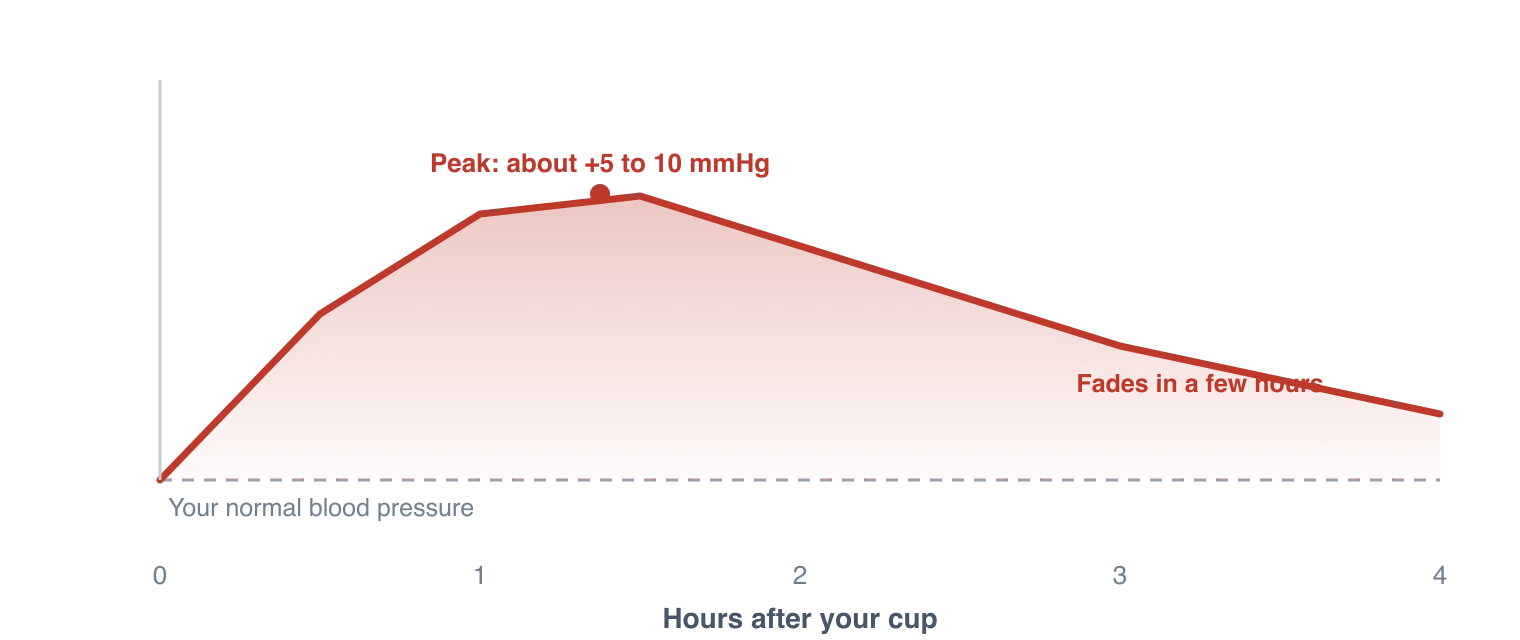
The short-term rise happens because caffeine briefly stimulates your cardiovascular system and can prompt a small release of stress hormones. The result is a bump that appears soon after you drink, peaks within the first hour or two, and then drifts back toward your normal reading. The curve below shows the typical shape: a quick rise, a short plateau, and a gradual return to baseline.
Why regulars feel less
One of the most important details is that the blood-pressure effect is not the same for everyone. It is largest in people who rarely consume caffeine, and much smaller - sometimes barely measurable - in people who drink coffee every day. That is because the body develops a tolerance to caffeine's pressor effect with regular exposure. The occasional coffee drinker who has a strong cup before a check-up may see a bigger jump than a daily drinker who has the same cup.
This tolerance is why blanket warnings about coffee and blood pressure can be misleading. If you drink coffee routinely, your usual cup is unlikely to move your pressure much at all. The effect matters most for first-timers, for people returning to caffeine after a break, and for anyone who suddenly drinks far more than usual.
Does it cause hypertension?
A short bump is one thing; developing lasting high blood pressure is another. Here the news is reassuring: for most people, habitual moderate coffee is not clearly linked with a higher chance of developing chronic hypertension, and large reviews of coffee drinkers have generally not found the rise in cardiovascular risk that older fears predicted. Some studies even suggest neutral or slightly favourable long-term associations, which is part of why heart-health guidance has softened toward coffee.
None of that erases individual variation. Research describes averages across large groups, and you are one person. If you want to understand what the readings themselves mean - the difference between normal, elevated, and the stages of high blood pressure - our blood pressure chart by age lays it out. Coffee is only one of many inputs into those numbers, alongside salt, sleep, stress, activity, weight, and family history.
If your pressure runs high
If you already live with high blood pressure, you do not necessarily have to give up coffee, but a little care is wise. Keeping to moderate amounts is the first step, since the effects scale with dose. Pay attention to how your own body responds, because sensitivity is personal. And be especially mindful of large, unfamiliar caffeine hits, such as a strong pre-workout drink or an oversized coffee-shop order, which combine a big dose with other stimulants.
It also helps to separate caffeine from moments that already raise your pressure. Having a strong coffee right before intense exercise, a stressful meeting, or a blood-pressure reading can stack effects. Swapping to decaf later in the day, or spacing coffee away from those moments, gives you the drink without the extra push. As always, your healthcare provider can help you set a personal limit that fits your readings and your medications.
What else moves your numbers
It is easy to fixate on coffee and forget that it is one of the smaller levers on your blood pressure. Day to day and year to year, the bigger influences are your sodium intake, your weight, how well you sleep, your stress levels, how active you are, and how much alcohol you drink. A strong coffee might nudge a single reading; those other factors shape your baseline. If you are working to keep your pressure healthy, they are where the real gains sit, and coffee is usually a sideshow by comparison.
Weight is one of the most consistent influences, which is why blood-pressure guidance so often mentions it alongside diet and activity. If you want a quick sense of where you stand, our BMI calculator gives a fast screen, and the blood pressure chart by age puts the readings themselves in context. Neither replaces a proper check with a clinician, but together they help you see the whole picture rather than blaming a single cup.
It also helps to think about caffeine as a whole rather than coffee alone. The same pressor effect applies to strong tea, cola, energy drinks, and pre-workout supplements, and the concentrated, fast-acting doses in energy drinks tend to matter most. If your pressure runs high, those are worth more caution than a normal cup of coffee, especially when combined with the other stimulants they often contain.
Habit tames the effect, too. Because regular drinkers develop tolerance to caffeine's pressor action, a steady daily coffee routine is gentler on your pressure than an erratic pattern of big, occasional hits. If you are going to drink coffee, a consistent, moderate habit is kinder to your numbers than saving it all for a giant weekend order. And if you ever want the ritual without the caffeine, decaf gives you the taste with almost none of the effect.
None of this means blood pressure should be ignored. High blood pressure is common, often silent, and a major driver of heart and kidney problems, so knowing your numbers matters far more than knowing your coffee count. The reassuring message is simply that, for most people, a moderate coffee habit is not the thing standing between them and a healthy reading. Focus your attention on sleep, salt, movement, weight, and stress, keep caffeine sensible, and let coffee be one of the small, pleasant constants rather than a source of worry.
Coffee and your readings
One practical tip protects the accuracy of your own monitoring: do not drink coffee in the 30 minutes before you check your blood pressure. Because caffeine can lift the reading temporarily, a cup just beforehand can make your numbers look worse than your true baseline. Home-monitoring guidance routinely advises avoiding caffeine, along with exercise and smoking, in the half hour before a measurement.
One reading rarely tells the whole story anyway. Blood pressure swings through the day with activity, food, stress, and yes, caffeine, so a single high number after a strong coffee is not a diagnosis. What matters is the trend across many calm, consistent readings taken the same way, ideally at the same times of day and before caffeine rather than after it. If you track at home, keeping that routine steady tells you far more about your true pressure than any single measurement, and it makes the small, temporary effect of a cup of coffee easy to see for what it is.
Put together, the story of coffee and blood pressure is calmer than the headlines suggest. Expect a small, temporary rise that shrinks the more regularly you drink, no clear link to lasting hypertension for most people, and sensible caution if your pressure already runs high. For the wider view of how coffee fits your health, and how much is reasonable in a day, see our guides on whether coffee is good or bad for you and how many cups a day are safe.