That fluttering, pounding, or skipped-beat feeling after a strong coffee has a name: palpitations. They are common, they are unsettling, and for most healthy adults they are harmless. Caffeine is a stimulant, so a big or fast dose can make you briefly aware of your own heartbeat. The key is knowing why it happens, how to calm it, and the handful of warning signs that mean it is worth getting checked.
Coffee can trigger palpitations in sensitive people, usually after higher doses, on an empty stomach, or alongside poor sleep and stress. For most healthy adults they are harmless and short-lived. See a doctor if they are frequent, persistent, or come with chest pain, breathlessness, dizziness, or fainting.
What palpitations are
A palpitation is simply an awareness of your heartbeat that feels unusual. People describe it in different ways: a racing or pounding heart, a fluttering in the chest, or the sensation of a skipped or extra beat. Most of the time your heart is beating normally and you are just noticing it more, often because something - like caffeine, adrenaline, or anxiety - has turned up the volume. Occasionally there is a genuine extra beat, called an ectopic beat, which is extremely common and usually benign.
Because the feeling happens in your chest, it can be frightening even when it is harmless. Understanding the mechanism takes away a lot of that fear. It also helps to know your normal baseline, which our guide to resting heart rate by age explains, so you can tell an ordinary heartbeat from something out of the ordinary.
Why coffee can trigger them
Caffeine is a stimulant that increases activity in your nervous system and can prompt a small release of adrenaline. In sensitive people, or at higher doses, that can raise your heart rate slightly and make the heartbeat feel stronger or occasionally irregular. Espresso and energy drinks deliver caffeine quickly and in a concentrated form, which is why a fast, strong hit is more likely to be felt than a mild cup sipped slowly.
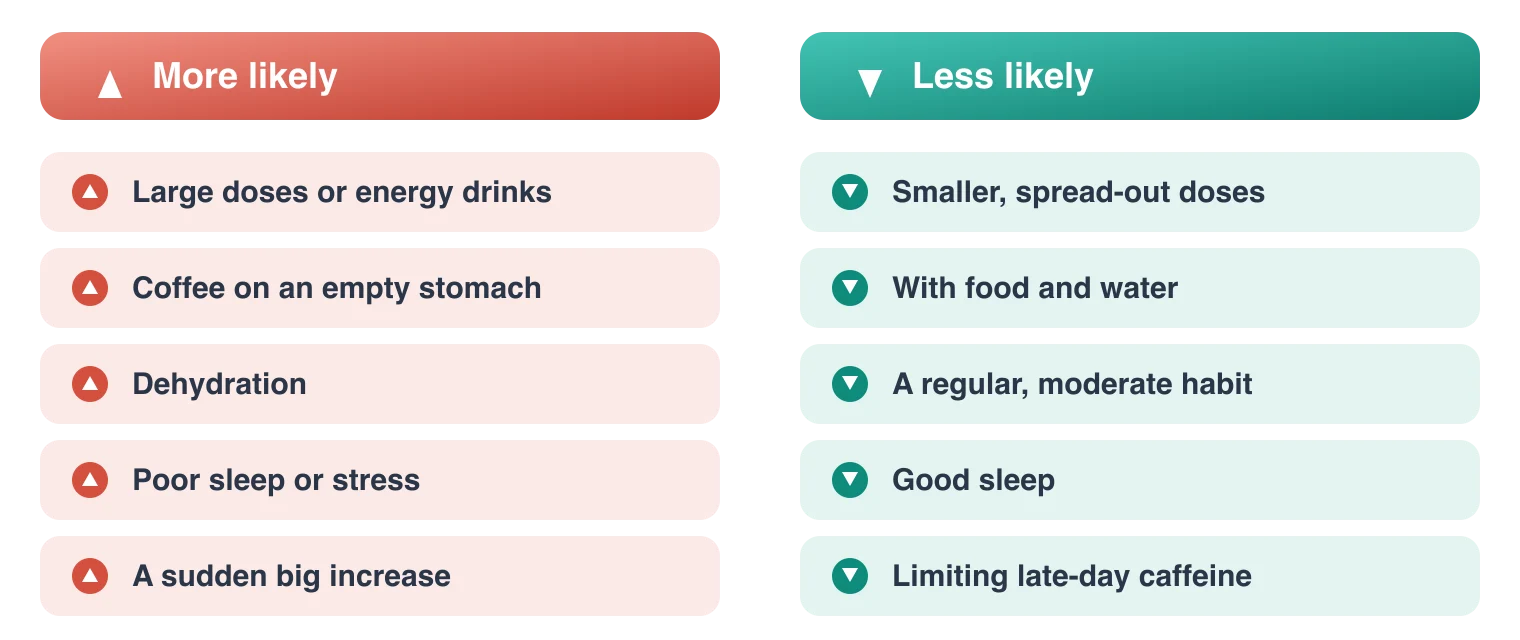
Context matters as much as the dose. Coffee on an empty stomach hits faster, dehydration and poor sleep make the heart more reactive, and anxiety amplifies the sensation until you notice every beat. Stack a few of those together - a big coffee, no breakfast, a short night, a stressful morning - and a flutter becomes far more likely than the caffeine alone would suggest.
What the research shows
Here is the reassuring part. Despite how common the worry is, large studies of everyday caffeine intake have generally not found that habitual, moderate coffee causes more of the extra beats that underlie most palpitations. Research following thousands of people has repeatedly failed to link regular coffee drinking with a meaningful rise in these ectopic beats for the general population, which is why blanket "cut out all caffeine" advice has softened.
That said, averages across big groups do not override your own experience. Some people are genuinely caffeine-sensitive and reliably feel palpitations after coffee, and people with certain heart rhythm conditions may be advised to limit it. The evidence says caffeine is not a common cause of dangerous rhythm problems in healthy adults, not that it never affects anyone. If coffee consistently sets off your heart, that personal signal is worth respecting even when the population data is calm.
What makes them more likely
Palpitations after coffee are rarely about the coffee alone. They are usually the product of several small factors lining up. The comparison below shows what tends to make a caffeine flutter more likely, and the simple habits that make it less likely.
How to settle them
When a flutter hits, simple steps usually help it pass. Stop drinking more caffeine for the day, have some water, and sit down to rest. Slow, steady breathing calms the nervous system and often eases the sensation within minutes. Because anxiety makes palpitations feel stronger, reminding yourself that a brief flutter is common and usually harmless can itself take the edge off.
To prevent them, aim at the triggers rather than the coffee itself. Keep your usual amount moderate, avoid strong coffee on an empty stomach, stay hydrated, and be cautious with energy drinks, which combine a large caffeine dose with other stimulants. Protecting your sleep matters too, since being run down makes the heart more reactive; our guide to how much sleep you need is a good place to start. Many people find they can keep enjoying coffee with just these small adjustments.
Coffee, anxiety, and the loop
Palpitations and anxiety are tightly linked, and coffee sits right at the junction. Caffeine raises arousal in the nervous system, which can produce the very sensations - a faster heartbeat, a fluttery chest, a keyed-up feeling - that anxiety also produces. When you notice your heart after a strong coffee, it is easy to read that as a warning sign, which raises anxiety, which makes the heartbeat feel stronger still. That feedback loop is often what turns a harmless flutter into a frightening few minutes.
Recognising the loop is half the cure. If you know that caffeine can create these feelings and that a brief flutter is usually benign, the sensation loses much of its power to alarm you. People who are prone to anxiety are often more sensitive to this effect, and they frequently find that trimming caffeine, or moving it earlier in the day, noticeably calms both the palpitations and the worry that feeds them.
Practical steps break the cycle. When a flutter starts, slow your breathing deliberately - a longer exhale than inhale signals your body to settle - and remind yourself that the feeling will pass as the caffeine peak fades. Cutting back on strong coffee, avoiding it on an empty stomach, and staying hydrated all reduce how often the sensation shows up in the first place. Knowing your ordinary resting pulse helps too, because a familiar baseline makes an occasional blip easier to shrug off.
Sleep quietly sets the stage for all of this. A short or broken night leaves your nervous system more reactive the next day, so the same coffee that normally passes unnoticed can set off a flutter when you are run down. Because caffeine and poor sleep push each other in a circle - a late cup costs you rest, and lost rest tempts another cup - protecting your sleep is one of the most effective ways to keep palpitations rare. If your nights have been rough, easing off caffeine for a few days while you catch up is often enough to settle a jumpy heart.
It is worth being honest about the limits of self-reassurance, though. Anxiety and a genuine rhythm problem can feel similar, and caffeine can be involved in both. If your palpitations are frequent, intense, or come with chest pain, breathlessness, dizziness, or fainting, treat them as a medical question rather than an anxiety one and get them checked, which is exactly what the next section covers.
When to see a doctor
Most coffee palpitations need nothing more than a pause and a glass of water. Some patterns, though, deserve professional attention. Get medical help promptly if palpitations come with chest pain, shortness of breath, dizziness, or fainting, or if a racing or irregular heartbeat does not settle. Book a routine appointment if palpitations are frequent, are becoming more common, last a long time, or if you have a known heart condition or a family history of heart rhythm problems.
The reason to act on those signals is not caffeine itself but the small chance that palpitations are pointing to an underlying rhythm issue that caffeine merely made noticeable. A healthcare provider can check your heart, put the sensation in context, and reassure you or investigate further. For everyone else, the takeaway is steady: an occasional flutter after a strong coffee is a normal quirk of a stimulant drink. Keep your intake moderate, mind the triggers, and read our wider guide on whether coffee is good or bad for you for the full picture.